
Perth Vs Brisbane Vs Adelaide: Where Should You Invest in 2026?
Two months into 2026, the Australian housing market has locked into a clear split. While Sydney and Melbourne values have flatlined or fallen slightly monthly, and are highly sensitive to reduced household…
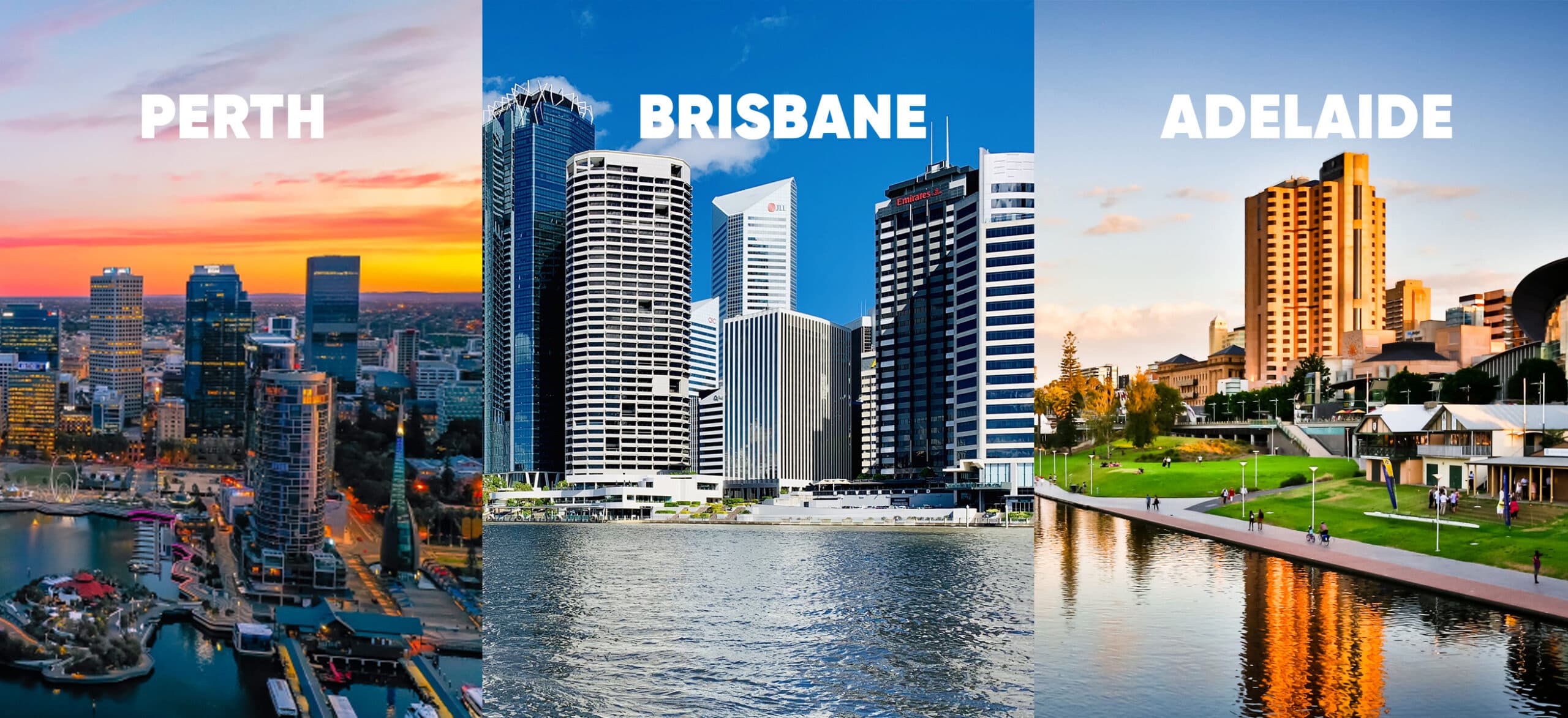
Two months into 2026, the Australian housing market has locked into a clear split. While Sydney and Melbourne values have flatlined or fallen slightly monthly, and are highly sensitive to reduced household serviceability and current interest rate pressures, the mid-sized capital cities continue to post steady month-on-month gains of more than 1%.
Data from the February 2026 Home Value Index paints a stark picture: national property values rose by 0.8%, but this growth was heavily split. While Sydney's median house price sits flatly above $1.6 million, Perth, Brisbane, and Adelaide continue to surge, supported by extremely tight inventory levels and persistent demographic shifts. This dynamic landscape has completely reshaped the property market Australia wide.
For property investors, this multi-speed market presents a unique challenge. With traditional suburbs slowing down, the choice isn’t whether to look elsewhere, but rather which mid-sized powerhouse offers the right mix of risk-adjusted growth and cash-flow sustainability for your portfolio. Navigating the changing property market landscape in Australia requires a shift in focus to these thriving regions. Should you capitalise on Perth's record-breaking supply deficit? Tap into Brisbane’s pre-Olympic infrastructure runway? Or invest in the quiet, structural economic stability of Adelaide?
To answer these questions, we look at the core data driving this capital city split. Backed by insights from Propwealth’s lead property strategists, including Parag Dixit (Director of Strategy & Finance) and Julius Dabre (Co-Founder & Lead Data Analyst), this comprehensive analysis blog breaks down the forecasts, market drivers, and specific suburbs to watch across Perth, Brisbane, and Adelaide in 2026.
Remember: Finding the best investment properties depends entirely on matching these regional trends with your long-term wealth goals.
Why Are Mid-Sized Cities Outperforming Sydney and Melbourne?
Understanding why the 2026 Australian property market has been divergent requires a close look at the total number of advertised listings. Sydney and Melbourne have seen a distinct pickup in the flow of new listings, giving buyers more choice and cooling aggressive bidding. Conversely, stock levels in mid-sized capitals remain severely compressed, making it a highly competitive environment for anyone seeking to secure premium investment properties.
As Julius Dabre notes: "The momentum we are seeing in Perth, Brisbane, and Adelaide isn't speculative; it's driven by simple math. Freshly advertised stock levels in Sydney and Melbourne are tracking close to or above their five-year averages. Meanwhile, Perth listings remain nearly 48% below historical averages, with Brisbane down 31% and Adelaide down 23%. Buyers in these cities are fighting over a severely limited pool of available housing."
This supply squeeze, combined with strong interstate migration and lower relative entry points, has allowed the mid-sized capitals to completely decouple from the stagnation seen in the larger eastern states. It is a defining feature of the current property market in Australia's lifecycle.
Perth Property Market: Outlook and Key Drivers
Perth has been the standout performer of the national property market, defying almost every prediction of a slowdown. In early 2026, Perth's median house price achieved a major milestone, officially cracking the million-dollar club for the first time. For borderless buyers, keeping up with the latest Perth housing market predictions is vital to timing this competitive cycle.
Why is Perth Booming?
The Western Australian capital is fueled by a severe imbalance between incoming demand and incoming supply. Strong population growth, driven by high employment in a robust resources sector and by structural interstate migration, continues to outpace the local construction industry's capacity to build new dwellings. Building material costs and persistent labour shortages mean completions are lagging well behind demand.
What the Forecasts Say About Growth and Yields?
Forecasting data from ANZ and KPMG indicate that Perth is leading the country, with projected house price growth of 10.9%-12.8% for 2026. These figures match up perfectly with the bullish Perth housing market predictions released by major banking economists earlier this year. Crucially for cash-flow-driven portfolios, Perth continues to deliver excellent gross rental yields, frequently sitting between 5.0% and 6.5%. The unit and townhouse market is experiencing an extra layer of acceleration as affordability constraints push buyers toward more accessible price points across the property market Australia.
Top Suburbs to Watch in Perth
When targeting Perth, look to master-planned infrastructure corridors and strong employment nodes:
- Ellenbrook: Continues to attract steady rental demand and low vacancy rates, benefiting heavily from the newly integrated Metronet rail links.
- Alkimos: A rapidly growing northern coastal hub offering affordable entry-level opportunities alongside substantial localised transport extensions.
- Rockingham & Baldivis: High-performing hubs in the southern corridor providing an ideal combination of strong rental yields, affordable purchasing points, and quick access to industrial employment zones.
Brisbane Property Market: Outlook and Key Drivers
Brisbane has firmly shed its reputation as a cheaper regional alternative, evolving into a highly competitive metro market. Having recently overtaken Melbourne's median house value, the River City has made strategic asset selection more critical than ever. Investors are heavily focused on identifying the best suburbs in Brisbane that still offer a buffer of relative affordability.
Why is Brisbane Booming?
Brisbane's growth is anchored by a massive multi-billion-dollar infrastructure pipeline leading up to the 2032 Olympic Games. Landmark transport and lifestyle projects, such as the Cross River Rail and Brisbane Metro, are actively reshaping suburban accessibility and driving up local land values. This infrastructure runway is paired with a steady, long-term influx of white-collar professionals and families migrating from New South Wales and Victoria, cementing its status as a premier destination for investment properties.
What the Forecasts Say About Growth and Yields?
Economic consensus from ANZ and KPMG projects Brisbane house prices to grow by 9.5% to 10.9% throughout 2026. This sustained pressure means that finding the best suburbs in Brisbane to invest in requires looking closely at middle-ring gentrification and localised supply constraints. While vacancy rates across greater Brisbane remain under 1%, creating intense upward pressure on rents, gross rental yields for detached houses hover around a more compressed 3.5% to 4.5%. For investors prioritising high cash flow, townhouses and middle-ring units offer compelling alternatives across the broader Australian property market.
Top Suburbs to Watch in Brisbane
To secure long-term capital growth, look for suburbs that feature clear structural scarcity or benefit directly from major transit upgrades:
- Paddington & New Farm: Highly sought-after inner-ring suburbs where land supply is zero and strict heritage protections limit new builds, ensuring sustained value retention. These stand out as some of the best suburbs in Brisbane for premium historical capital growth.
- Stafford & Chermside West: Highly popular with young families due to excellent school catchments and close proximity to the major retail and healthcare hubs of Chermside. This makes them the best suburbs in Brisbane to invest if you are targeting steady, middle-ring family rental demand.
- Salisbury: An accessible option situated roughly 12km south of the CBD, offering steady gentrification, large traditional blocks, and close proximity to universities and transport links.
Adelaide Property Market: Outlook and Key Drivers
Adelaide rarely exhibits the sharp cyclical volatility of mining capitals or the rapid FOMO-driven price spikes seen on the eastern seaboard. Instead, the South Australian capital offers highly reliable, steady wealth preservation, making it a core focus for buyers tracking Adelaide investment properties.
Why Adelaide is Booming
Adelaide’s market strength is backed by excellent economic fundamentals, including advanced defense manufacturing contracts (such as the multi-decade AUKUS submarine program) and growing tech and healthcare sectors. These industries anchor a permanent, high-income local employment base. Concurrently, overall listing stock remains incredibly tight across the entire property market Australia, ensuring that properties are absorbed quickly.
What the Forecasts Say About Growth and Yields?
While CoreLogic data shows Adelaide dwelling values rising by over 11% annually, the formal Adelaide property market forecast 2026 takes a more measured approach for the remainder of the year, projecting steady growth between 6.1% and 8.2%. Entry-level price brackets ($600,000 to $750,000) face competitive pressure from first-home buyer incentives, while established rings offer solid, organic growth.
As Parag Dixit explains: "Adelaide is the quiet achiever for risk-conscious investors. Its growth is backed by long-term, government-funded employment sectors and a structural supply shortage. It offers a highly resilient foundation with healthy rental yields averaging 4.0% to 5.5% in its outer rings."
This resilience forms the foundation of the optimistic Adelaide property market forecast 2026, giving buyers confidence that their capital is protected from steep volatility. For those building a balanced portfolio, incorporating well-chosen Adelaide investment properties offers a perfect counterweight to more volatile markets.
Top Suburbs to Watch in Adelaide
The most attractive growth metrics are concentrated within Adelaide's affordable northern corridors and leafy northeastern established rings:
- Salisbury: A standout northern hub leading the metropolitan area in capital growth, driven by buyers seeking affordability and strong rental yields.
- Tea Tree Gully & Campbelltown: Leafy, highly liveable northeastern suburbs featuring excellent school catchments and direct access to public transport networks like the O-Bahn.
- Gawler / Two Wells: Located in the outer northern growth corridor, these areas benefit from extensive master-planned land releases and infrastructure upgrades, appealing strongly to young families.
Head-to-Head Comparison: Perth vs Brisbane vs Adelaide
To help you evaluate how these three markets compare across the wider property market Australia, our analytics team has outlined their core metrics for 2026:
| Metric / Feature | Perth Property Market | Brisbane Property Market | Adelaide Property Market |
| Projected 2026 Growth | 10.9% – 12.8% | 9.5% – 10.9% | 6.1% – 8.2% |
| Average Gross Yields | 5.0% – 6.5% | 3.5% – 4.5% | 4.0% – 5.5% |
| Primary Market Driver | Population influx & severe listing deficit | Pre-Olympic infrastructure & migration | Local economic diversity & tight supply |
| Affordability Level | Moderate (Median has breached $1M) | Moderate to Low (Has outpaced Melbourne) | Moderate (Strong relative lifestyle value) |
| Risk Profile | Moderate (Historically tied to resources) | Low to Moderate (Highly diversified) | Very Low (Consistently stable track record) |
So, Where Should You Invest Your Money?
Choosing where to invest ultimately depends on your portfolio goals, borrowing capacity, and risk tolerance within the current property market Australia cycle:
1. Invest in Perth if your focus is immediate, maximized cash flow and taking advantage of a historic supply deficit. The low inventory environment provides short-to-medium term security.
2. Invest in Brisbane if you want to align your capital with a decade-long runway of multi-billion-dollar infrastructure leading up to the 2032 Olympics. This environment is ideal for unearthing the best investment properties built on long-term capital appreciation.
3. Invest in Adelaide if you are risk-averse and prioritize steady, long-term capital preservation supported by a reliable local economic base.Navigating a changing, multi-speed property market requires deep data analysis and local, on-the-ground expertise. Don't leave your wealth creation to guesswork. Book a free 1-on- 1 consultation call with Australia's leading experts and let’s design a tailored property strategy to help you secure the right asset in the ideal market.