
The Early Signs of a New Property Growth Cycle
Confidence is slowly returning to Australia’s property market. Lower interest rates, limited supply, and renewed investor interest are starting to shift momentum. So, what’s happening and what’s driving this shift?…
Confidence is slowly returning to Australia’s property market. Lower interest rates, limited supply, and renewed investor interest are starting to shift momentum. So, what’s happening and what’s driving this shift? Let’s have a deeper look at it.

Signs of Improving Conditions
Many in the sector believe the market has passed its lowest point. Sentiment is improving, and earnings expectations are strengthening. And this is the sense that both buyers and investors are showing more interest, while quality assets are becoming harder to secure.
Even office properties, which faced the sharpest declines, are starting to see a lift in demand for premium spaces.
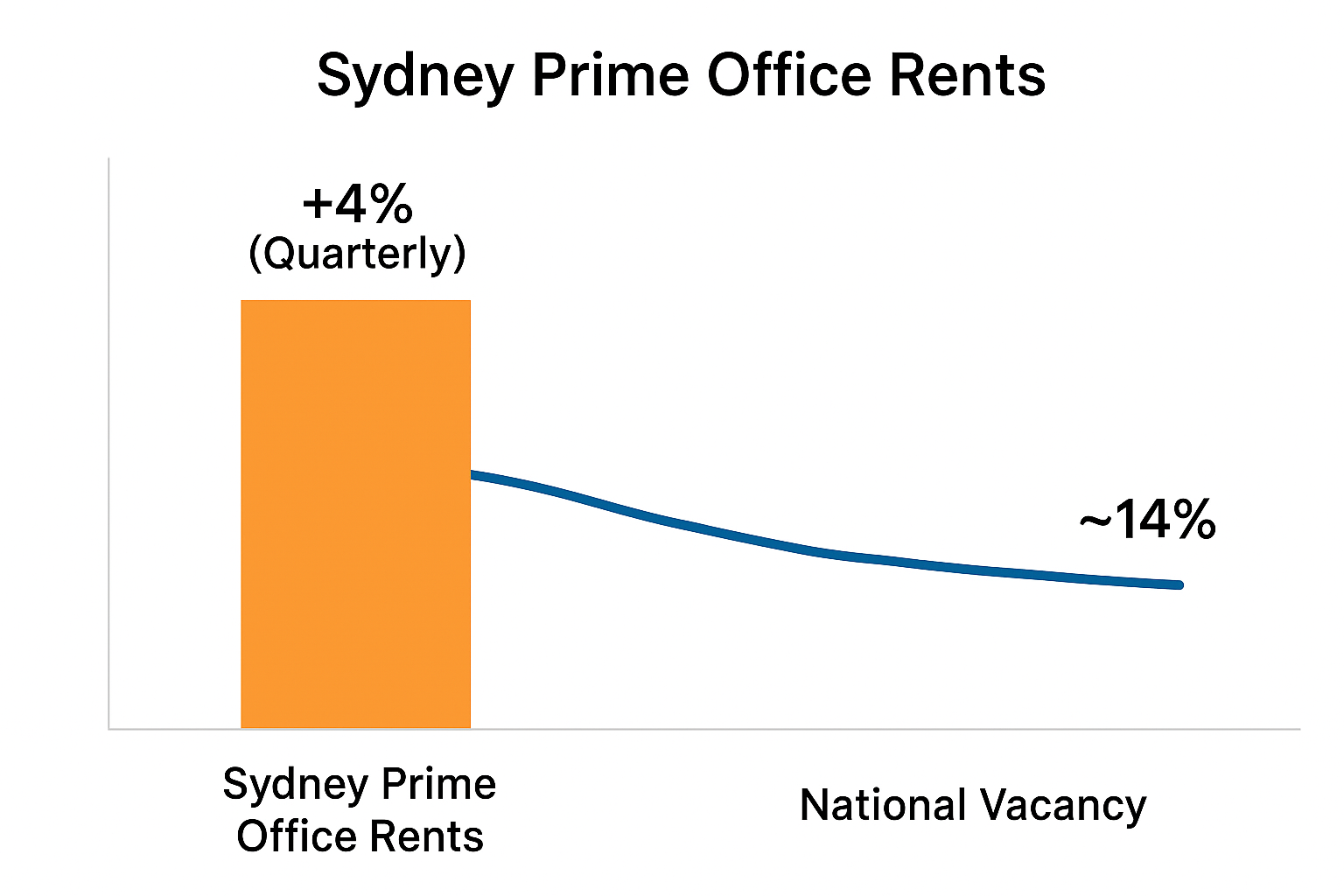
Prime office rents in Sydney rose by nearly 4% over the past quarter, showing that demand is slowly returning for high-quality assets despite broader sector weakness.
Factors Driving the Shift
Several factors are supporting the change in outlook, and there is no one factor behind it, like
- The cost of capital has eased this year, helping stabilise values across multiple portfolios.
- Investor activity is also returning gradually, supported by stronger equity markets and reduced appetite for private credit.
- New supply? It remained limited across residential, industrial, retail, and office sectors.
- Nationally, industrial vacancy rates are still below 1%, keeping pressure on rents.
- Even high building costs mean existing properties often offer better value than new projects.
Result? This combination of limited supply and improving sentiment is leading to a sense of urgency among buyers. Like, they are acting quickly to secure opportunities, worried that waiting too long could mean missing out. In other words, "fear of missing out" is what influences their behaviour, especially in markets that show early signs of resilience.
But the challenges still remain in the market. Like the recovery is unlikely to be even. Location and asset quality are expected to matter more than before. Some cities are showing stronger results, while others continue to struggle.
Risks are also there, such that
- Rising demand may meet labour shortages
- Slow planning approvals could delay projects and increase costs
- Higher property taxes in some states can discourage buyers
- Extra charges may reduce transaction activity in certain markets.

State and Sector Differences
However, when we take a closer look at the situation, we find that different segments of the market are not moving in unison. Offices remain the slowest to recover, with national vacancy rates still at around 14%, close to record highs. In contrast, within cities, too, results differ.
In Brisbane, for instance, apartment values rose by more than 6% over the past year, demonstrating resilience, but Melbourne is still trailing, with only marginal growth. Even inside Sydney’s CBD, location matters greatly.
Additionally, some developers are focusing on data centres, infrastructure-linked projects, and selective residential opportunities while remaining cautious about new office developments.
That means the market is now entering a more selective phase, where quality, location, and asset type carry greater weight than before. We might not see a broad lift again, like in past cycles. Instead, performance will be uneven, shaped by specific opportunities and risks in each segment.
Looking Forward
Now, since the market shifts, the focus should be on patience and precision. While the market may improve, not every location will equally reap the benefits.
So, if you are considering opportunities, you need to look beyond headline trends. The strongest outcomes will come from choosing well-located properties and resilient sectors instead of expecting a blanket upswing.
In this cycle, timing and selectivity are set to matter more than ever. Acting early, but wisely, may prove the key to capturing the gains ahead.